
The 5-Part Brand Narrative Framework Every Startup Needs
Want to turn your brand into an engine that acquires users while you sleep? Your narrative is key. Learn how to build a brand narrative that resonates deeply with your target audience, and turns viewers into paying customers.
The 5-Part Brand Narrative Framework Every Startup Needs
In startups, technology doesn’t win, stories do. Markets reward the companies people believe in, not the ones with the prettiest features. That’s why two products can launch the same week, with almost identical functionality and one becomes a category leader while the other quietly disappears.
The difference?
One founder owns their narrative. The other gets swept away by it.
What Is a Brand Narrative?
“Narrative” gets thrown around so much it’s almost meaningless. So here’s the simple version: A narrative is a structured story that connects what you do with why it matters. It aligns logic with emotion, creates coherence between your product, your market, and your purpose. In a noisy environment, it gives your startup weight. A strong brand narrative answers two questions:
- Why should users choose you?
Because you solve a specific problem better than anyone else right now. - Why should people invest in you (time, trust, capital)?
Because your company will be more valuable tomorrow than it is today.
Everything else (your messaging, your marketing, your pitch, your product language) ladders up to this. By the end of this article, you’ll walk away with a 5-part brand narrative framework used by top founders and category creators, so you can build a story that attracts users, investors, talent, and long-term momentum. We’ll break down the most powerful narrative framework founders can use to build a story that sticks.
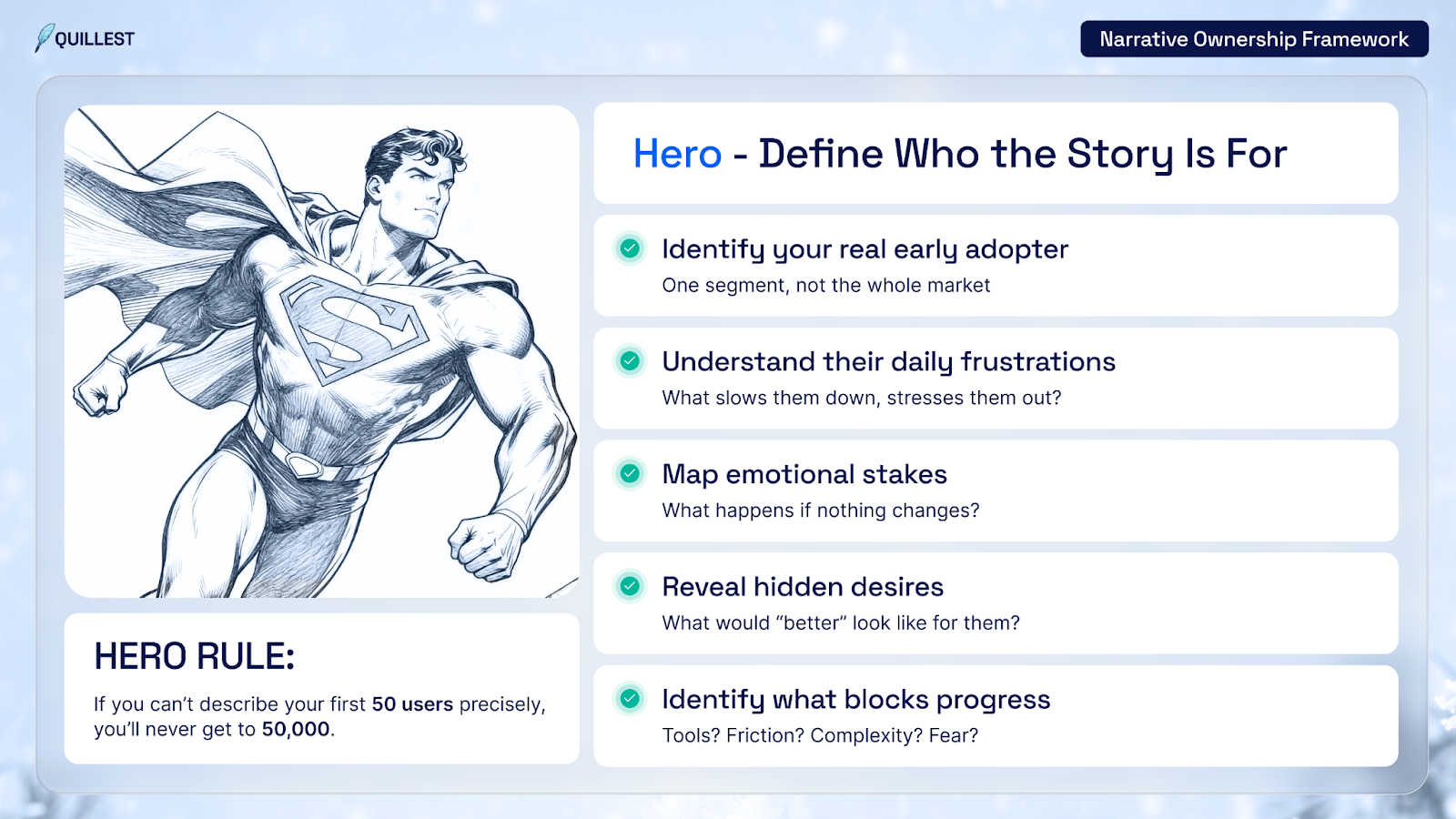
1. The Brand Hero: Your User, Not You
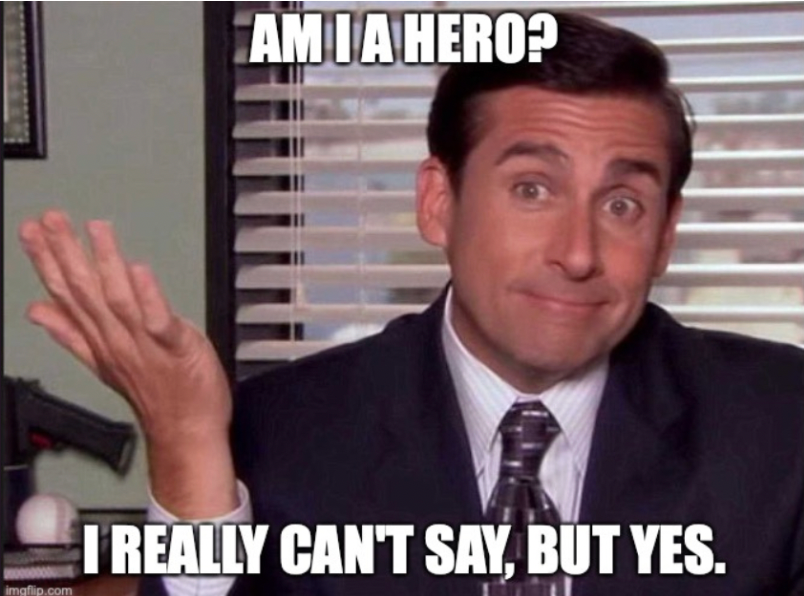
The biggest mistake founders make is assuming they or the product is the hero of the story.
It’s not.
Your user is the hero. Your customer is the protagonist. They’re the ones fighting the battle, struggling through the journey, and wanting a transformation.
Your product only matters through the lens of their world.
To define your brand hero, answer:
- Who is your actual early adopter?
- What job are they trying to get done?
- What frustrates them every day?
- What do they secretly wish was possible?
- What are the stakes if they fail or continue as they are?
Here’s the rule: If you can’t describe your first 50 users clearly, you’ll never acquire the first 50,000. The sharper your brand hero, the stronger your brand narrative.
2. The Brand Villain: The Real Problem They’re Fighting
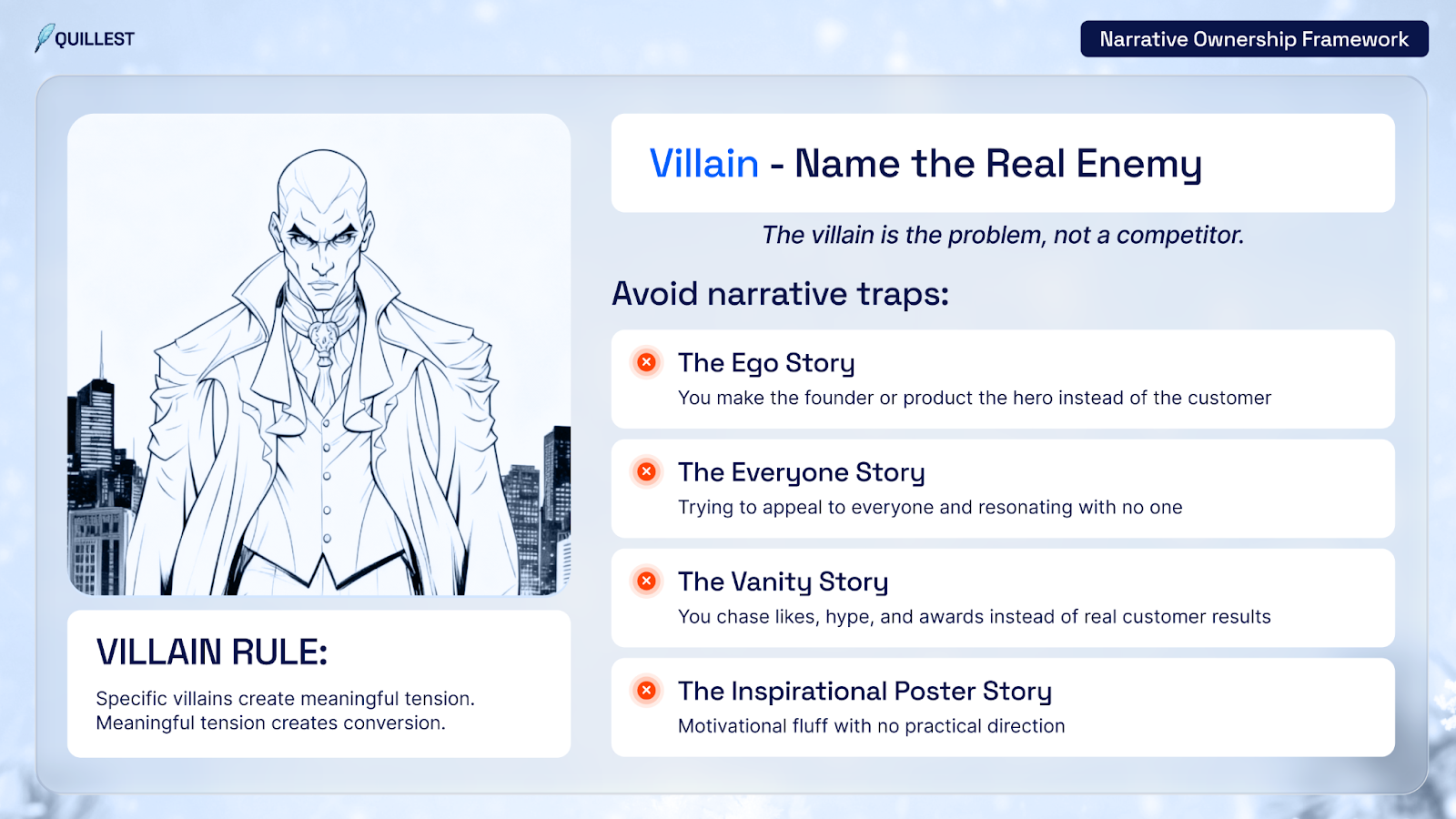
Every story needs tension. Tension requires a villain.
In startup storytelling, your villain is almost never a competitor. It’s the problem your user wrestles with every single day - quietly, often painfully, and almost always without a clear solution.
Your brand villain is the friction that slows them down, the inefficiency that drains their time, the complexity that keeps them stuck, the overwhelm they’ve normalized, or the bottleneck they can’t escape.
Naming the villain is powerful because it gives your story urgency and clarity. It shows your users that you truly understand what they’re struggling with. Without a clearly defined villain, your brand narrative has no stakes and no proof that you’re the right solution for them to choose.
3. The Brand Setting: The Market Environment You’re Entering
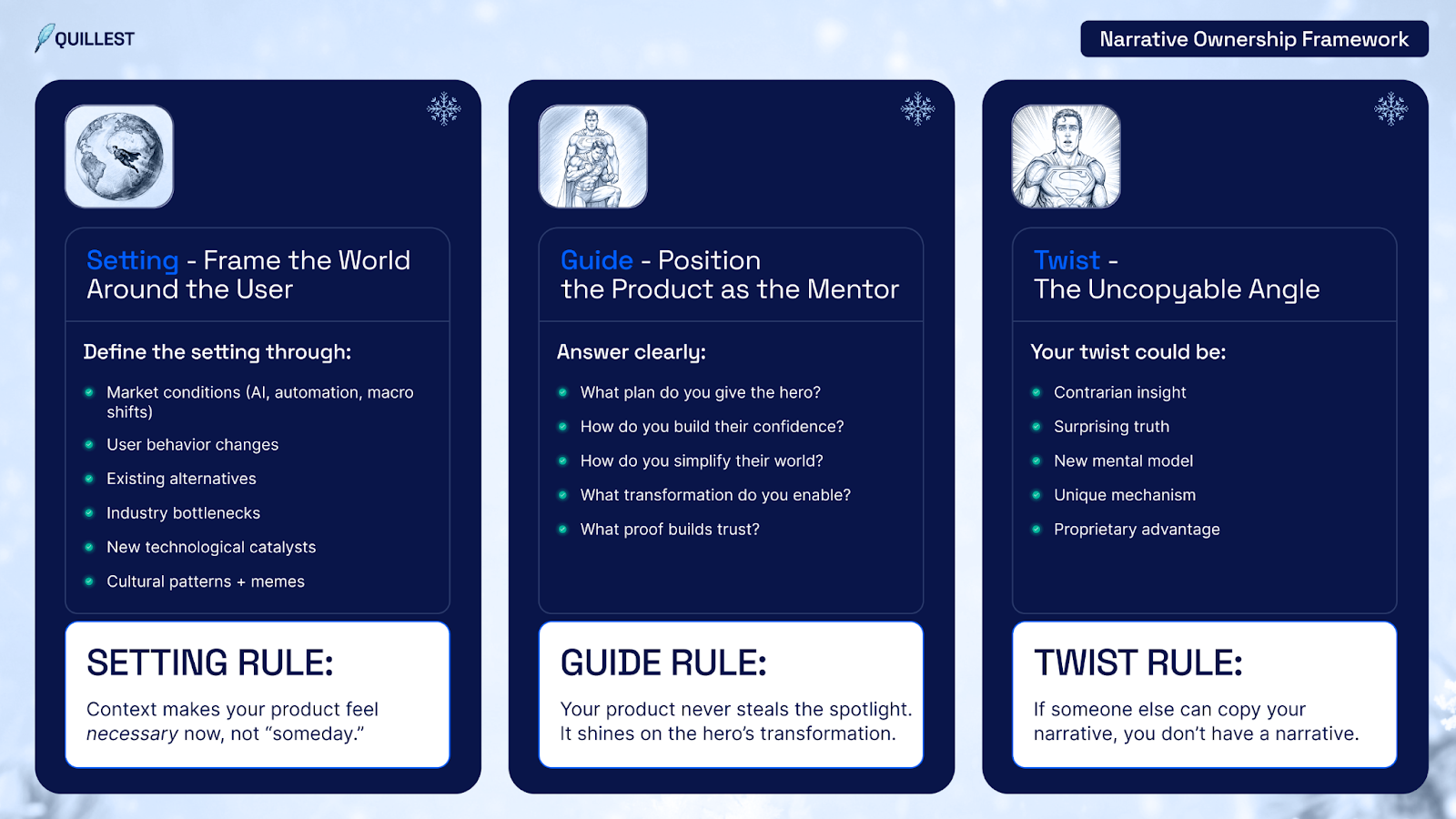
Your brand narrative doesn’t exist in a vacuum. It lives inside a “setting”, a broader world your audience already recognizes.
The brand setting is shaped by:
- Market conditions (e.g., AI boom, automation wave, macro changes)
- User behaviors and expectations
- Established competitors
- Current industry bottlenecks
- Major shifts or technological catalysts (LLMs, cloud, privacy, automation)
- Cultural trends and memes
Your job is to frame the setting so the story matters. If you’re building an AI productivity tool, for example, your setting isn’t “AI.” It’s the world of overwhelmed knowledge workers drowning in tabs, apps, and notifications.
Once the setting is established, the opportunity becomes obvious.
4. The Brand Guide: Your Product as the Path to Transformation
If the user is the hero, then your product is the guide, the mentor that helps them overcome their challenges and reach the transformation they want.
This is one of the most important narrative shifts a founder can make: you are not the savior, and your users are not passive recipients. They are the center of the story, and your product exists to empower them.
A guide’s role is simple: give clarity, reduce friction, build confidence, and unlock progress.
Your product’s narrative should clearly answer:
- What plan do you give the hero?
Great guides offer a clear next step, a simple path, a way forward. - What confidence do you offer?
Users adopt tools that make them feel capable, supported, and in control. - How do you simplify their world?
The guide removes noise, complexity, confusion, and unnecessary decision-making. - What transformation do you unlock?
Faster work. Clearer insights. Fewer steps. A calmer mind. A sense of mastery. - What proof do you use to build trust?
Testimonials, data, usage, outcomes, as signals that reassure the hero they chose the right companion.
The guide never steals the spotlight. It never makes the story about itself. Its value is shown through the hero’s transformation, and not just the product’s features. When you position your product as the guide, you give the user the starring role. You show them that the story is really about their growth, their progress, and their success.
That’s what makes a brand narrative resonate and a product stick.
5. The Twist: What Makes Your Brand Narrative Uncopyable
Every good story has a twist - a moment, insight, or angle that flips the user’s expectations and makes the product feel inevitable.
Your twist might be:
- A contrarian insight
“Workflows are dead. Agents will replace them.” - A surprising truth
“People don’t want automation, they want fewer decisions.” - A new framing
“Your calendar isn’t a tool. It’s an operating system for your brain.” - A unique mechanism
“We use behavioral data, not metrics, to generate insights.” - A proprietary advantage
“One model trained uniquely on your organization’s patterns.”
Your twist is the part of your brand narrative that only you can tell. Without it, anyone can steal your messaging. With it, your story becomes defensible.
There’s also a second layer: transformation.
The twist explains why your product is different.
The transformation explains why it matters to the user.
Transformation is the outcome your hero experiences, as in the shift from where they are to where they want to be. It’s how your story proves that you understand not just their problems, but their deeper motivations:
- Clarity instead of chaos
- Confidence instead of doubt
- Speed instead of friction
- Focus instead of overwhelm
- Progress instead of stagnation
Showing customers that you understand not just what they struggle with, but also what they want, is what turns a brand narrative into conviction, and a product into a must-have.
Common Traps to Avoid When Building Your Brand Narrative
However, here’s a catch: two narrative traps quietly sabotage most founders.
1. The Ego Story
This is the narrative where the founder or the product positions itself as the hero.
“We built revolutionary tech.”
“Our vision will transform the industry.”
“Our platform is the future.”
This story collapses fast because users don’t see themselves in it. They can’t relate to your ego, your brilliance, or your roadmap. When the story centers on you, the user disappears. When the user disappears, the brand narrative dies.
2. The Everyone Story
The second trap is just as fatal: trying to build a story that appeals to “everyone.”
Everyone is not a hero.
Everyone is not a protagonist.
Everyone is no one.
A narrative that tries to resonate with all will resonate with none.
General = forgettable.
Specific = magnetic.
Having a specific hero makes the villain clear.
Having a clear villain creates meaningful tension.
Meaningful tension builds stories that convert.
An Example of a Successful Brand Narrative
Take Canva as an example. Canva’s hero isn’t “everyone who needs design.” It’s the non-designer – the marketing manager, founder, or student who must create visuals quickly but doesn’t have design skills or time to learn traditional tools.
Their villain isn’t Adobe or Photoshop. It’s the overwhelming complexity those tools represent: steep learning curves, endless layers and menus, wasted time trying to make things look good, dependence on designers for simple tasks, and the constant feeling of being creatively blocked or inadequate.
In the larger brand narrative framework, the fit becomes clear:
- The hero is the non-designer under pressure to create
- The villain is complex, intimidating design software
- The setting is a world where visual content is now mandatory for communication
- The guide is Canva’s easy templates and drag-and-drop tools
- The twist is design democratization, professional-quality output without professional skills.
This is why Canva became a category-defining brand. It didn’t win because it out-featured Adobe, but it reframed the entire story around a user who had been ignored, and a villain no one else was naming.
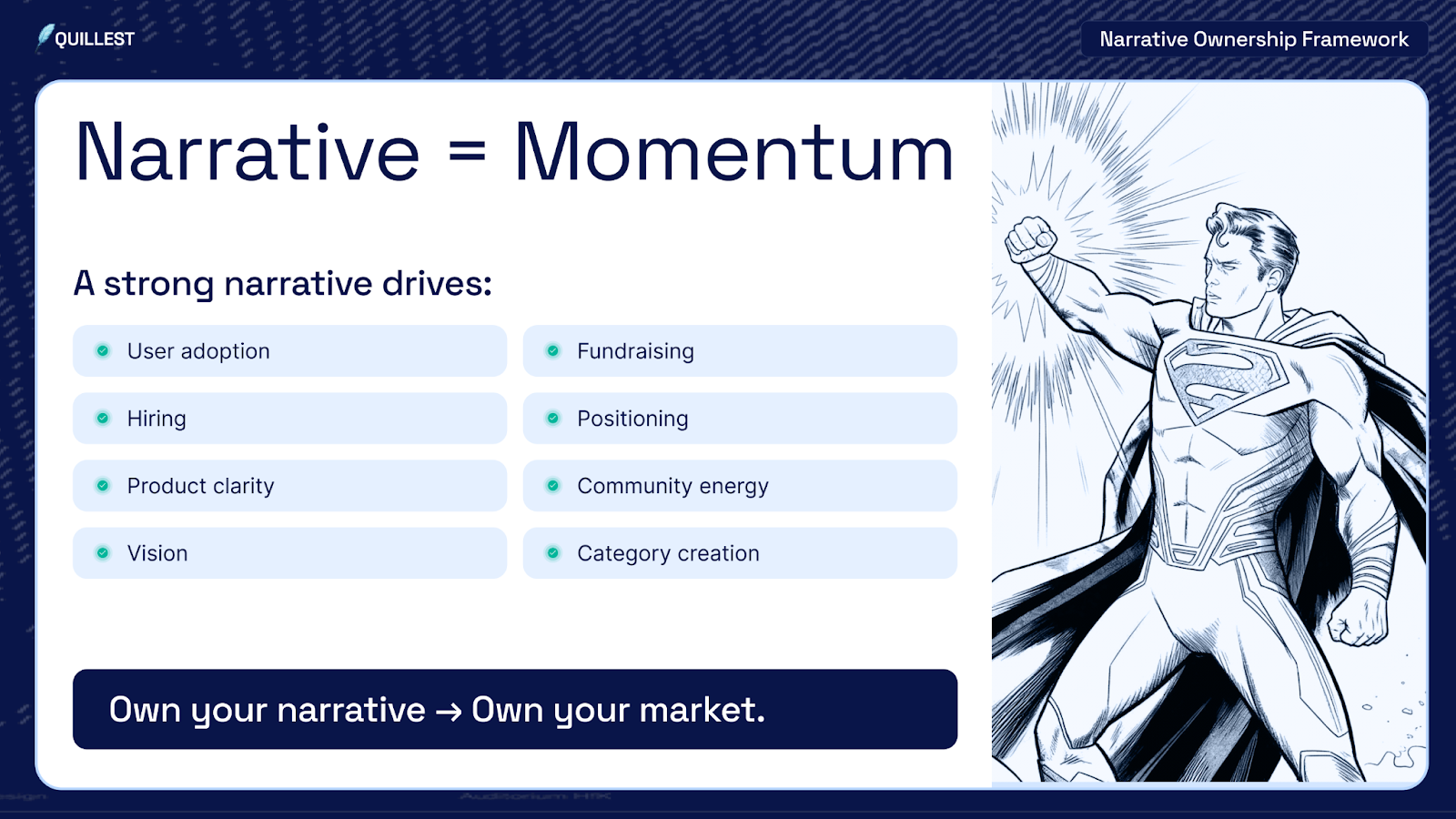
Own Your Narrative, Own Your Market
A strong brand narrative gives direction to the team, clarity to the product, confidence to investors, magnetism to users, and meaning to everything you build. At its core, every enduring startup story carries the same five elements:
- A Hero.
- A Villain.
- A Setting.
- A Guide.
- A Twist.
Master these and your brand narrative becomes powerful, repeatable, and unmistakably yours. You shape perception, create momentum, attract believers, and build trust before the product is even finished.
Own your story. Shape your category. Control your narrative, or the narrative will control you.
If you want help applying this framework to your own startup, let’s chat at https://www.quillest.co/#contact-us
Be the one AI Recommends
Looking to scale revenue, never worry about your pipeline again and become a market leader?
Let's chat.